Cybersecurity and artificial intelligence: what actually changes
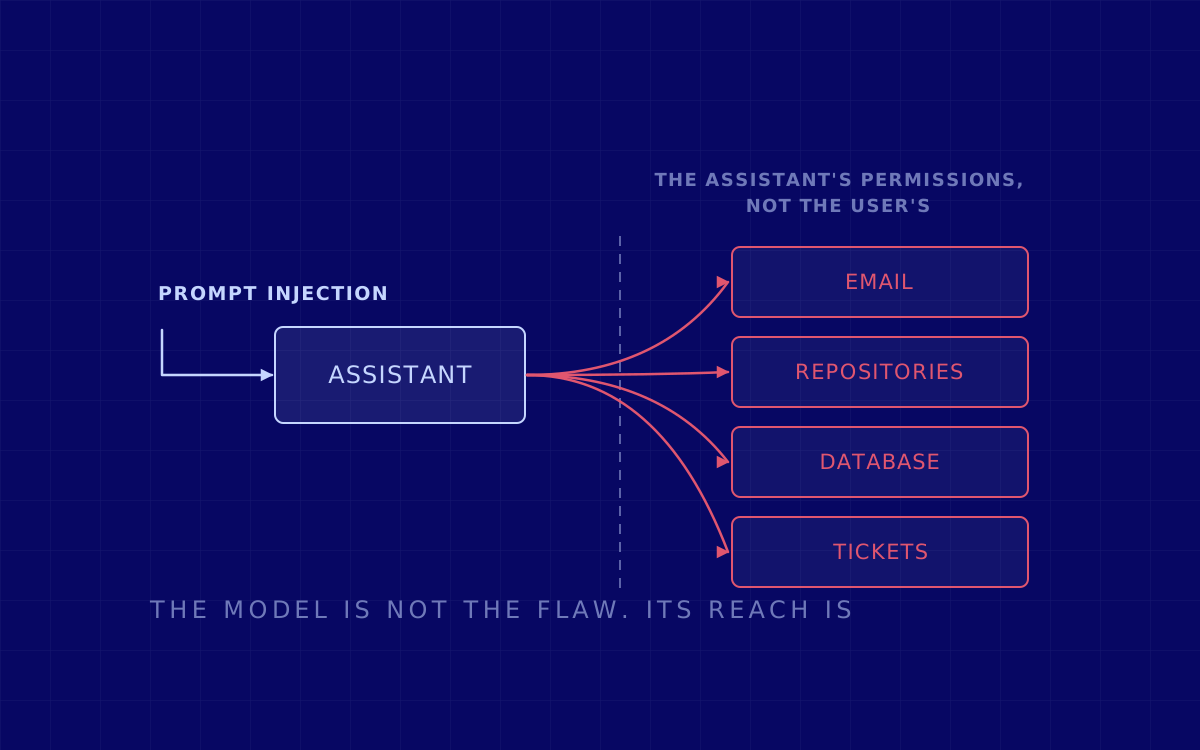
What risks generative AI brings into a company, why prompt injection is not the real problem, and what an AI pentest actually tests.
AS
3 August 2026 · 9 min read
A secure development lifecycle, SSDLC, means spreading the security work across the whole of development instead of saving it for one review at the end. It sounds like textbook methodology, and most of the time it gets implemented like one: by buying tools. This article is about the other way of doing it, which starts with the decisions.
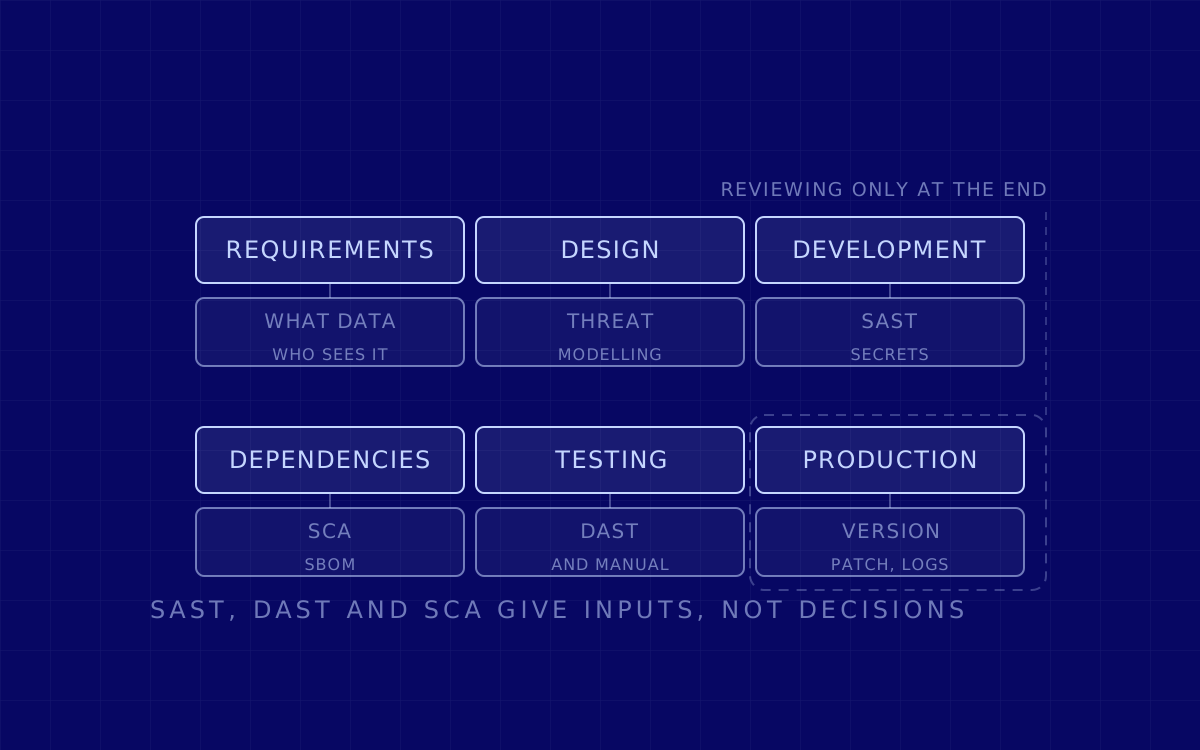
A secure development lifecycle is not a phase bolted onto the end of a project. It is the idea that at every stretch of development there is a piece of security work that can only be done well in that stretch, and that doing it earlier or later goes badly or does not happen at all.
At design time the question is what could go wrong with this architecture. While code is being written, it is whether known classes of defect are going in. At integration, it is what is being pulled in from third parties. At release, it is whether somebody can really break it. And once it is in production, it is whether you would notice.
Put another way: an SSDLC does not add one gate at the end, it distributes several small gates along the way. That is the whole concept, and the rest is implementation detail.
Reviewing security just before going to production has two problems, and neither of them is fixed by reviewing better.
You do not need a study to see the mechanism: the later a wrong design decision surfaces, the more has been built on top of it. What you will not find here is the usual figure for how many times more expensive it is to fix in production, because that figure circulates attributed to work we have not read, and this site does not publish numbers it cannot stand behind.
This is the split, in the order the work shows up. No phase needs to start by buying anything.
The most common mistake when putting this in place is buying three tools, plugging them into continuous integration and calling the project done. What happens next is predictable: the pipeline starts emitting hundreds of warnings, nobody has time to triage them, and within a few weeks the team learns to ignore the alert or simply switches it off. The organisation ends up worse than before, because now it also believes it is covered.
SAST, DAST and SCA produce inputs, not decisions. The lifecycle is what you do with those inputs: who looks at them, on what basis something is decided to block a release, and what happens to whatever is decided not to fix. A team with a spreadsheet and that criterion clear is safer than one with three dashboards and none.
If you have to choose where to put money, putting it into reducing the noise of what you already have pays off more than adding one more tool.
It is worth not confusing two things that sound alike. A vulnerability assessment searches in breadth, with tools, and finds classes of defect that are already catalogued. A penetration test searches in depth, with a person, and finds what comes out of chaining two things that on their own were nothing, or of business logic allowing something nobody thought about.
That second category is the one nobody automates, and it is where the findings that really matter tend to be: permissions that can be escalated, flows that can be replayed, identifiers that can be guessed. If you want the detail of what that work looks like from the inside, it is in our pentesting methodology, and by target type in how a web application pentest works and how an API pentest works.
Inside an SSDLC, a pentest does not replace any of the above: it comes afterwards and checks whether the above worked. We run them against web applications and against APIs, and the deliverable is a reproducible proof of each finding together with what has to be done to close it, not a list of scanner warnings.
Putting the whole lifecycle in place at once does not work in any real team. This order does, and the first three things do not cost a licence:
If at some point you want somebody from outside to look at what you have built and try to break it, that is a conversation we can have here.
This text describes a practice, not a specific standard, and that is why it does not cite numbered clauses from any of them: the numbering changes between revisions and a citation from memory ages badly. It also carries no statistics on the cost of fixing defects late, for the reason given above.
English edition published on 4 August 2026. The Spanish original was published on 3 August 2026.
What risks generative AI brings into a company, why prompt injection is not the real problem, and what an AI pentest actually tests.
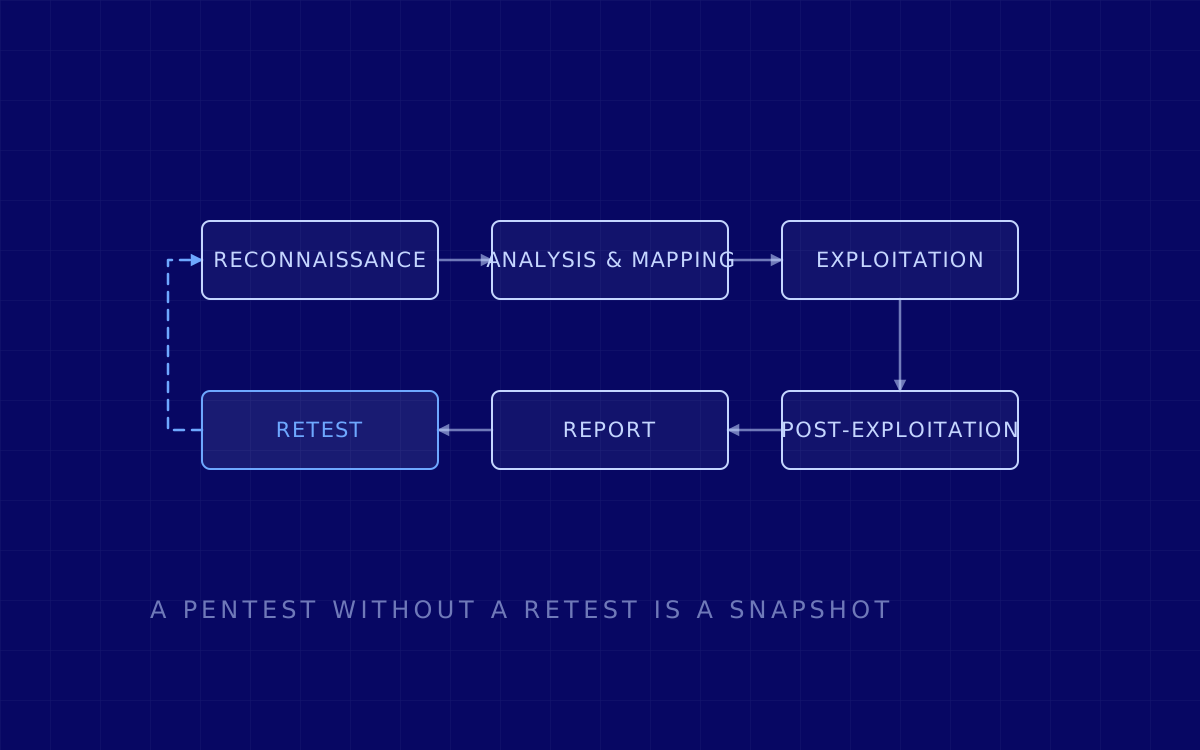
What a penetration test is, what phases it has, what you get at the end, how long it takes and how it differs from a vulnerability scan.
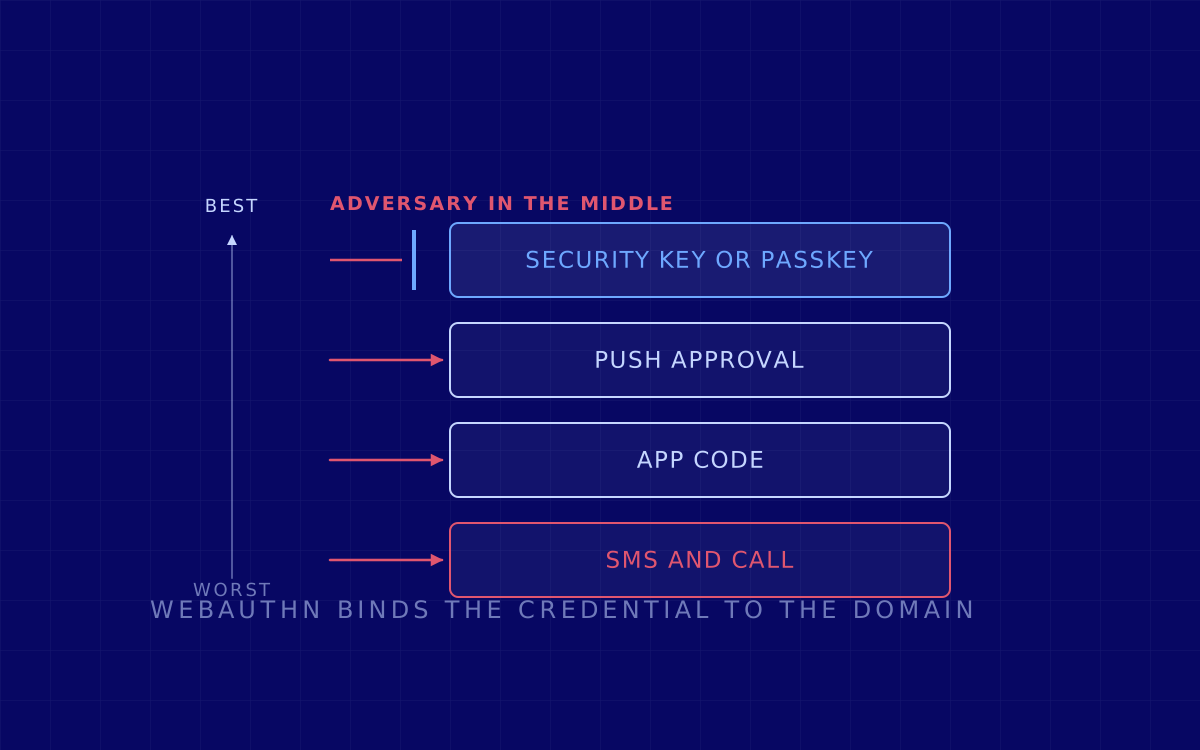
How 2FA works, which methods are strong and which are not, why SMS is no longer enough and how today’s phishing gets around it.
If any of this looks like a problem you are carrying, half an hour on a call scoping it with a pentester is worth more than reading another article.
Talk to a pentesterPick a time that suits you. You tell us what you need and where you are, and we explain how we work and how we can help.
When you book, we process your data to manage the meeting and its commercial follow-up. More information in our Privacy Policy.